

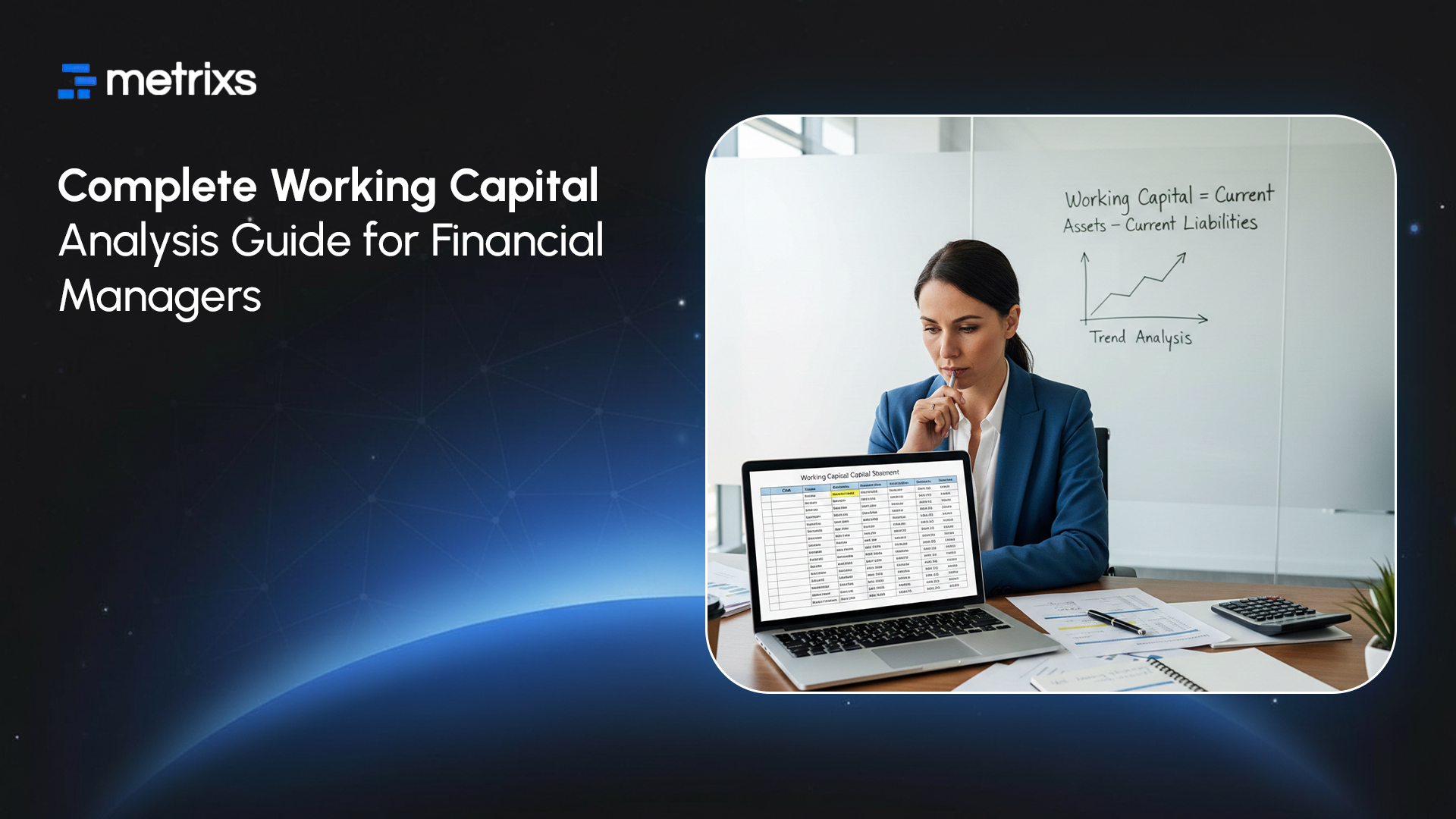
Financial health lives where operations and cash meet. Many firms miss out on $1.76 trillion in untapped funds. Most CFOs only started using working capital management tools last year. This delay means your company likely has cash trapped in inventory management or accounts receivable.
A proper working capital analysis reveals these leaks. Tools like Metrixs automate this process to find hidden opportunities instantly. Improving your working capital efficiency helps you fund growth without taking on new debt.
This guide shows you how to master working capital analysis to win. Learn to fix your cash conversion cycle and stay ahead.
Working Capital Analysis Fundamentals for Financial Managers
Financial health depends on if you can pay bills while growing. Working capital analysis provides this answer. It monitors your current assets like accounts receivable and your current liabilities such as accounts payable.
Paper profit differs from real liquidity. Working capital management tracks the actual cash you use for daily tasks. Effective finance needs these pillars:
- Current Assets: Cash and inventory management.
- Current Liabilities: Short-term debts.
- Liquidity Ratios: Metrics like the current ratio.
- Cash Conversion Cycle: Time to turn stock into cash.
A good working capital analysis checks your current ratio. Aim for 1.5 to 2.0 to stay safe. Ratios below 1.5 suggest a cash shortage. High numbers often show wasted potential. Track your working capital efficiency to keep money moving.
Using these working capital ratios helps you spot leaks. This working capital analysis ensures you stay liquid. Now you can use a step-by-step framework for cash flow optimization.
Step-by-Step Working Capital Analysis Framework
You can improve your liquidity by following a clear path. This working capital analysis helps you find and fix cash flow leaks.
Step 1: Calculate Net Working Capital
Start by listing your current assets like cash and accounts receivable. Then list your current liabilities like accounts payable. Subtract what you owe from what you own. This gives you your net working capital.
Step 2: Analyze Working Capital Ratios
Next, look at your working capital ratios. Divide your assets by your liabilities to get your current ratio. A number between 1.5 and 2.0 shows good health. Higher numbers might mean you have too much cash sitting still.
Step 3: Evaluate Cash Conversion Cycle Components
Calculate your cash conversion cycle. This includes your inventory management speed and how fast you collect from accounts receivable. It also factors in how long you take to pay accounts payable.
Step 4: Conduct Trend Analysis
Perform a regular working capital analysis to see how metrics change. Compare this month to last month. Watch for any drops in working capital efficiency. This working capital analysis catches problems early.
Step 5: Benchmark Against Industry Standards
Compare your liquidity ratios to other companies in your field. This helps you see if your working capital management stays competitive. Each industry has different needs for cash.
Step 6: Investigate Root Causes
If your working capital analysis shows poor numbers, find out why. High debt in accounts receivable often means your collection process needs a fix. Slow inventory management also drains your cash fast.
Step 7: Develop Optimization Strategies
Use your findings for cash flow optimization. Adjust your buying or renegotiate terms for accounts payable. These steps help you maintain high working capital efficiency. Consistent working capital analysis leads to better financial health.
Quick Glance: Working Capital Analysis Framework
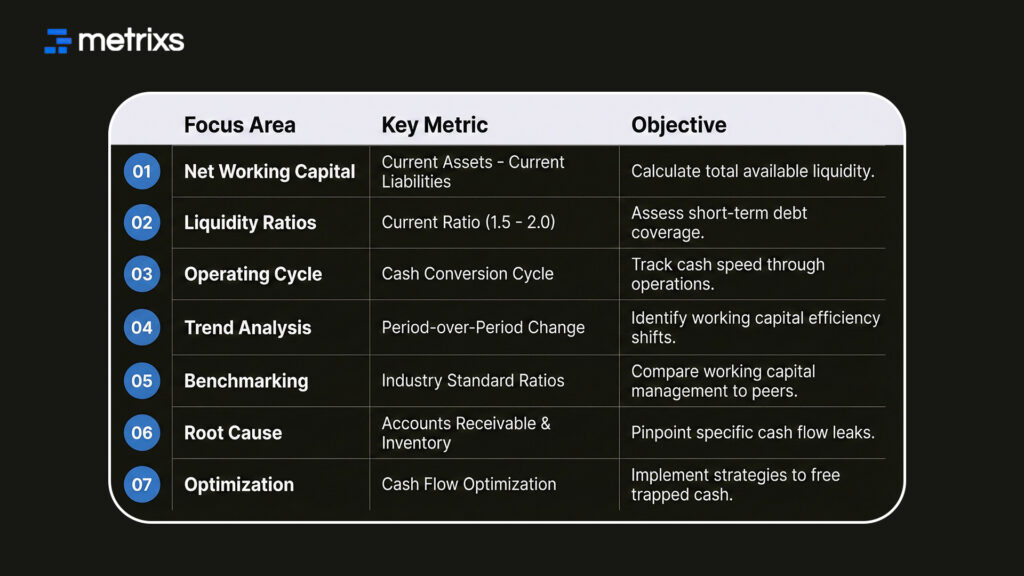
Using this framework helps you master working capital management for long-term success.
Core Working Capital Optimization Strategies for Financial Managers
Successful working capital management requires taking action on your data. You must turn your working capital analysis into specific steps that free up cash and improve your working capital efficiency.
Strategy #1. Accelerate Collections and Reduce DSO
Improve your accounts receivable by making it easy for customers to pay. Use digital portals and automated reminders to speed up the process. Offering small discounts for early payments helps your working capital analysis show better results. Faster collections lead to immediate cash flow optimization.
Strategy #2. Optimize Inventory Management Through JIT and Forecasting
Tying up cash in stock hurts your working capital efficiency. Use just-in-time inventory management to keep only what you need. Review your inventory management data often to find slow-moving items. This move lowers your current assets but raises your available cash.
Strategy #3. Extend Payables and Negotiate Favorable Terms
Work with vendors to stretch out your accounts payable terms. If you can move from 30 to 45 days, you keep cash longer. Good working capital management balances these extensions without hurting your supply chain. This strategy strengthens your liquidity ratios significantly.
Strategy #4. Leverage Technology and Automation
Stop using manual sheets for your working capital analysis. Modern tools automate your accounts payable and track your cash conversion cycle in real time. Automation ensures you never miss a chance for cash flow optimization. Using tech keeps your working capital ratios healthy and your team focused on growth.
Quick Glance: Working Capital Optimization Strategies
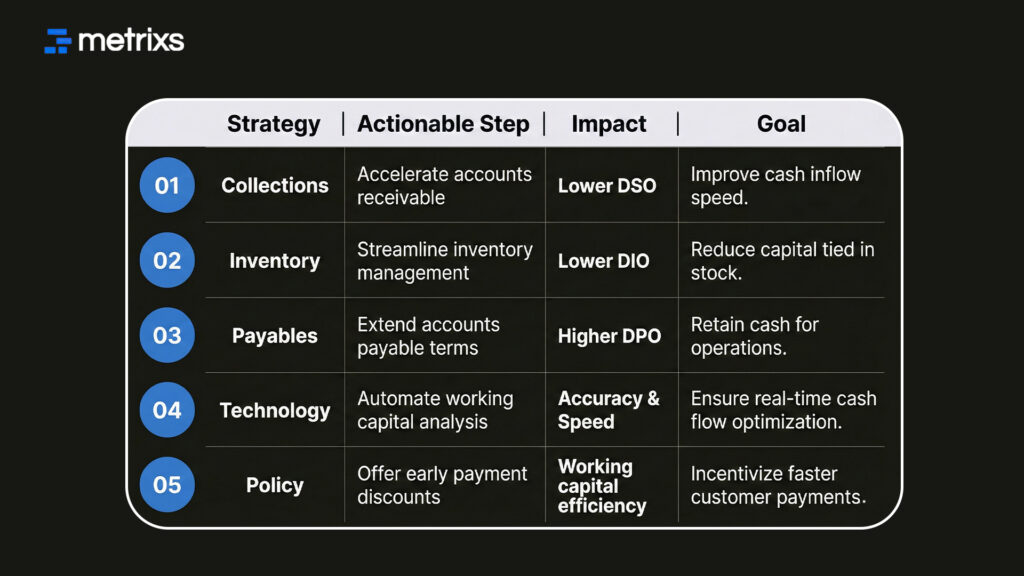
Taking these steps ensures your working capital management stays proactive and effective. Next, you can see how specific tools make this process easier.
Streamlining Your Working Capital Analysis with Metrixs Automation
Metrixs transforms your working capital analysis by turning raw ERP data into a unified view of financial health. Built for Microsoft Dynamics 365, it automates your working capital management to find hidden cash faster.
Special Capabilities:
- Automated Insights: Get 80% faster reporting on current assets and current liabilities.
- Real-Time Dashboards: Monitor your cash conversion cycle and working capital efficiency instantly.
- On-Demand Snapshots: Capture historical trends in inventory management and accounts receivable to make proactive decisions.
- Multi-Region Tracking: Manage global working capital ratios across multiple currencies effortlessly.
Metrixs ensures your working capital analysis is 99.9% accurate, eliminating manual errors and driving cash flow optimization. Using these tools turns your financial data into a measurable competitive advantage.
Conclusion
Working capital analysis determines if your business thrives or dies. Most managers face pain from messy spreadsheets and slow inventory management. Manual errors in working capital management often hide a failing cash conversion cycle until it is too late.
Wrong working capital analysis leads to frozen credit lines, missed payroll, and total business collapse. One slip in tracking current assets or current liabilities destroys your market reputation. You cannot leave your liquidity ratios to chance.
Metrixs fixes these risks by automating your accounts receivable and accounts payable data. It delivers the working capital efficiency required to avoid disaster.
Ready to automate your strategy? Learn how Metrixs simplifies your working capital analysis here.
FAQs
1. What is working capital analysis and why is it critical?
Working capital analysis measures the gap between current assets and current liabilities to ensure liquidity. This working capital management step reveals your working capital efficiency. Tracking your cash conversion cycle prevents cash crunches and supports cash flow optimization for long-term growth.
2. How do you interpret working capital ratios?
Healthy working capital ratios, like a current ratio between 1.5 and 2.0, show strong health. Working capital analysis uses these to track working capital efficiency. If your liquidity ratios fall too low, your accounts payable management might need immediate cash flow optimization.
3. What is the cash conversion cycle and how do you reduce it?
The cash conversion cycle tracks how fast cash moves through inventory management and accounts receivable. To reduce it, perform a working capital analysis to find delays. Faster collections and better working capital management improve your working capital efficiency and free up cash.
4. What are common working capital analysis mistakes?
Many ignore inventory management or seasonal shifts in current assets. Failing to track working capital ratios leads to poor working capital management. A bad working capital analysis often misses errors in accounts receivable, hurting your cash conversion cycle and overall working capital efficiency.
5. How frequently should working capital analysis be performed?
Perform a working capital analysis monthly to track your current liabilities and current assets. High-growth firms use working capital management tools for weekly checks. Constant monitoring of your cash conversion cycle ensures working capital efficiency and helps you maintain perfect liquidity ratios.

